
The average wedding costs most of a first-home deposit
The average wedding cost $34,000. A 10% deposit on the median home is $41,750.
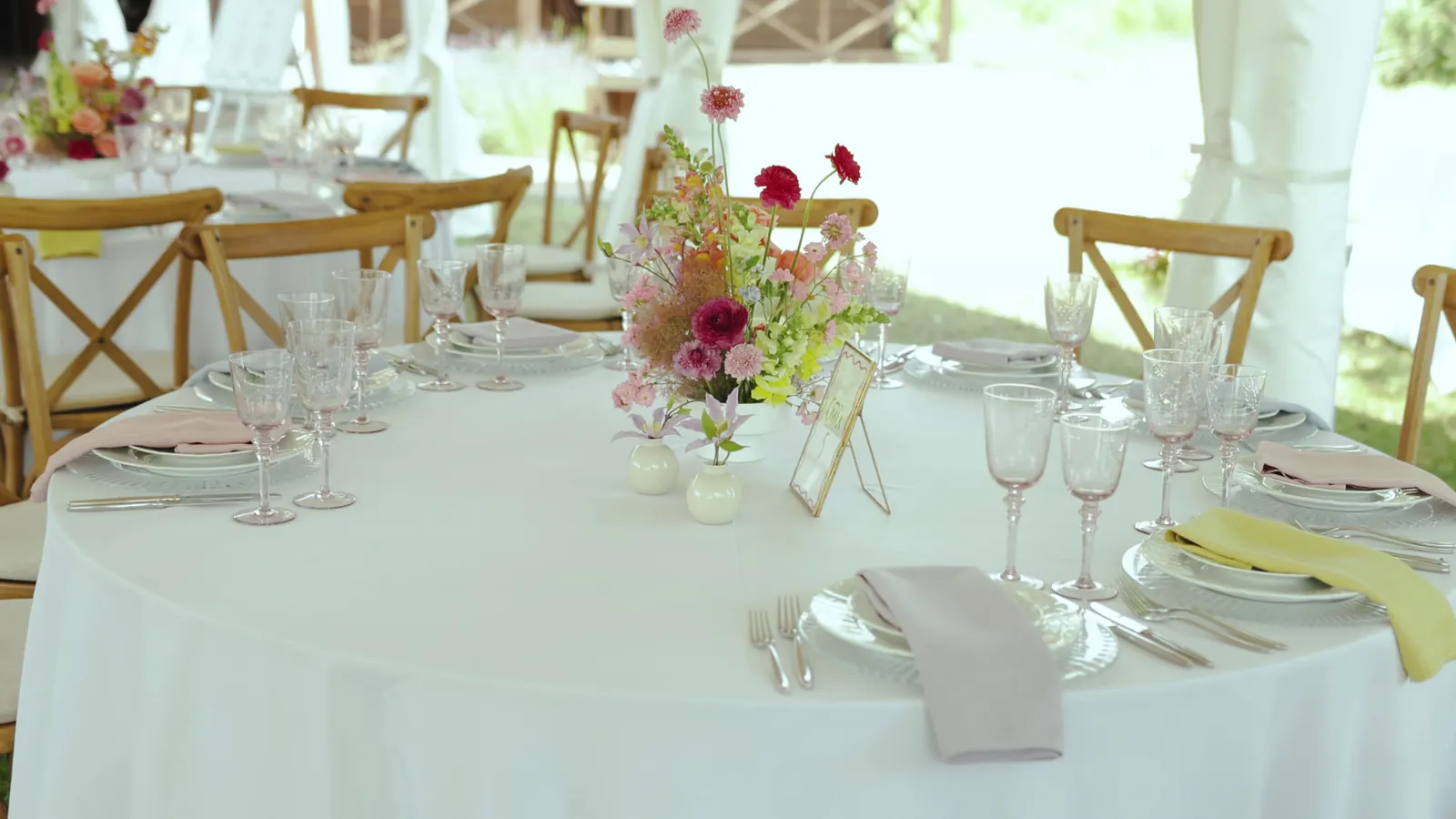
The average American wedding cost $34,000 in 2025, The Knot reports. A 10% deposit on September’s median existing home, $417,500, comes to $41,750. The average wedding therefore costs 81% of the down payment on a first home.
Most couples spend less than that. The median wedding cost $24,000, which is 57% of the same deposit. Either sum is large for a household: the average wedding is about five months of the median family’s income.
How wedding costs compare with a down payment
| Amount | Share of a 10% down payment ($41,750) | |
|---|---|---|
| Average wedding (The Knot) | $34,000 | 81% |
| Median wedding (The Knot) | $24,000 | 57% |
| Average wedding, couples marrying this year (Zola) | $36,000 | 86% |
| 10% down on the median existing home ($417,500) | $41,750 | 100% |
| 20% down on the same home | $83,500 | 200% |
Most couples spend less than the average
The median wedding cost $24,000, and a quarter of couples spent $12,000 or less. The average is higher than the median because the top quarter spent more than $41,000. For those couples, families covered 62% of the bill. Budgets also tend to grow during planning. In The Knot’s survey, 52% of couples said their first budget was lower than what they spent. Zola, which surveys couples marrying this year, puts the average at $36,000 for the second year running. The publisher of Rebecca Mead’s One Perfect Day, a history of the trade, described it as an industry “which has every interest in ensuring that the American wedding becomes ever more lavish and complex.” Who pays differs by generation. Gen Z couples invited 129 guests on average, against 112 for Millennials, and their weddings are mostly paid for by family. Millennials pay more of their own way and spend about 15% more. So couples who pay their own bills hold smaller, dearer weddings, and family money pays for bigger ones. In both cases the wedding and the deposit are drawn from the same family savings.
The ring got cheaper and the dress got dearer
The engagement ring costs less than it did. Couples who married in 2025 spent $4,600 on it on average, down from $5,200 the year before, The Knot found. The cause is the lab-grown diamond, which 61% of those couples chose for the centre stone. A lab-grown ring averaged $4,300 for a 2-carat stone. A natural one averaged $7,000 for 1.6 carats. The dress went the other way, and the cause is tariffs. China supplies about 90% of the bridal gown market, according to the National Bridal Retailers Association. In spring 2025 Chinese-made gowns faced a 145% tariff, later cut, temporarily, to 30%, NPR reported. Some designers raised prices across the board by as much as 30%. One shop added a tariff surcharge of 10% to 15% to every gown.
The diamond’s place in the proposal goes back to an advertisement. In 1947 a copywriter at De Beers’s advertising agency wrote “A Diamond Is Forever”, and in 1999 Advertising Age ranked it the best slogan of the 20th century. The line tied the stone to the proposal for the rest of the century. The white dress is older. Queen Victoria did not invent the white wedding, but her 1840 gown, white silk satin with an 18-foot train, helped make it the look brides still copy.
Spending more is not linked to a longer marriage
Two economists at Emory University, Andrew Francis-Tan and Hugo Mialon, surveyed more than 3,000 ever-married Americans. They found that marriage duration was inversely associated with spending on the engagement ring and the ceremony. That is an association, and it does not prove that a lavish wedding causes a divorce. It does mean the study found no sign that spending more helps a marriage last.
The first home now comes about a decade after the wedding
First-time buyers are older than they have ever been. In the profile the National Association of Realtors published on 5 November, they made up 22% of purchases, barely off last year’s record low of 21%. Their median age stayed at 40, an all-time high, and a record 10% of them paid all cash.
People marry about ten years before that. The Census Bureau puts the median age at first marriage at 30.8 for men and 28.4 for women in 2025, up from 23.5 and 21.1 in 1975. The same release found that 58% of Americans aged 18 to 24 still lived in their parents’ home. The wedding is therefore paid for in the years when a deposit would otherwise be compounding. Rent paid in that decade builds the landlord’s equity. The Federal Reserve’s latest survey found that young families and renters lost ground in wealth between 2022 and 2025.
What the wedding money does to a mortgage
Waiting to buy has a cost. NAR estimates that buying at 40 rather than 30 can mean about $150,000 less equity on a typical starter home. The monthly bill is high too. With 10% down on a $417,500 home at the 7.40% average 30-year rate, the loan payment alone is about $2,600 a month before taxes and insurance. That is more than a third of the median family’s $82,200 income before tax. Had the average wedding’s $34,000 gone into the deposit, the loan would shrink enough to cut that payment by about $235 a month. Over 30 years the saving is some $85,000. These figures move with their inputs. A higher home price or a larger down payment raises the deposit, and at 20% down it is $83,500, twice the figure used here. A different mortgage rate changes the payment and the saving, and leaves the 81% as it is.
A wedding and a deposit are now close to the same sum
One day of celebration costs almost the full deposit, at a time when the deposit has moved out of reach for a generation. The average wedding has 117 guests and costs $292 a guest. Thorstein Veblen gave spending for display its name, conspicuous consumption, in 1899. A wedding also buys a day people remember, and the memory has value. A $24,000 wedding and a $34,000 wedding differ by $10,000, which is a quarter of a deposit. Of the two purchases, only the deposit compounds.
How did it get here, and who feels it?
How it changed
Americans marry far later than their grandparents did. The Census Bureau puts the median age at first marriage at 30.2 for men and 28.6 for women in 2024, up from lows of 22.5 and 20.1 in 1956; it has tracked the measure since 1890. Married couples headed 47.1% of households in 2024, against a peak of 78.8% in 1949.
Source: USAFacts
Why it matters now
One part of the bill is getting cheaper. In The Knot's survey of almost 10,500 couples married in 2025, 61% chose a lab-grown stone for the engagement ring, up from 52% a year earlier, and average spending on the ring fell to $4,600 from $5,200. Lab-grown rings averaged $4,300 against $7,000 for natural ones, while the stones themselves grew larger.
Sources: Rapaport News; IDEX Online
For a family planning a wedding
Parents who help a couple with a wedding or a deposit work within the gift rules. In 2025 and 2026 each person may give any one recipient up to $19,000 a year under the IRS annual exclusion, so two parents can give a couple $76,000 between them without making a taxable gift. Above that, the giver, not the couple, is generally responsible for any gift tax.
Source: Internal Revenue Service
The fight behind it
The legal fight in the wedding trade is over who must serve whom. In 2018 the Supreme Court ruled 7 to 2 for a Colorado baker who refused to make a wedding cake for two men, faulting the state's civil rights commission. In 2023, in 303 Creative v. Elenis, it ruled 6 to 3 that Colorado could not force a website designer to create wedding sites carrying messages she disagrees with.
Customized portfolio review
Professional report, video call and further recommendations. From $180, in 3 tiers.
See the reviewSources23
The Knot Worldwide; The Knot; WeddingPro; Zola; NAR 1 2 3 4; FRED; Federal Reserve; White House Historical Association; Penguin Random House; Francis-Tan and Mialon; US Census Bureau; Rapaport News; NPR; Sotheby's; Project Gutenberg; USAFacts; IDEX Online; Internal Revenue Service; SCOTUSblog 1 2.
How the comparison is built. The deposit is 10% of NAR’s median existing-home price for September 2026; 10% is the median first-time buyer’s down payment. Payments are principal and interest on a 30-year loan at Freddie Mac’s 7.40% average. The Knot’s figures describe couples married in 2025, Zola’s couples marrying in 2026. Shares and months of income are our arithmetic.
Figures no source prints are arithmetic on these sources. Sources read 17 October to 14 November 2026. A wrong number gets a dated correction here. General information, not personal financial advice.