
The status symbol that costs almost nothing to keep
A Ferrari burns $41,000 a year before it moves. The cheap flexes are the rationed ones.
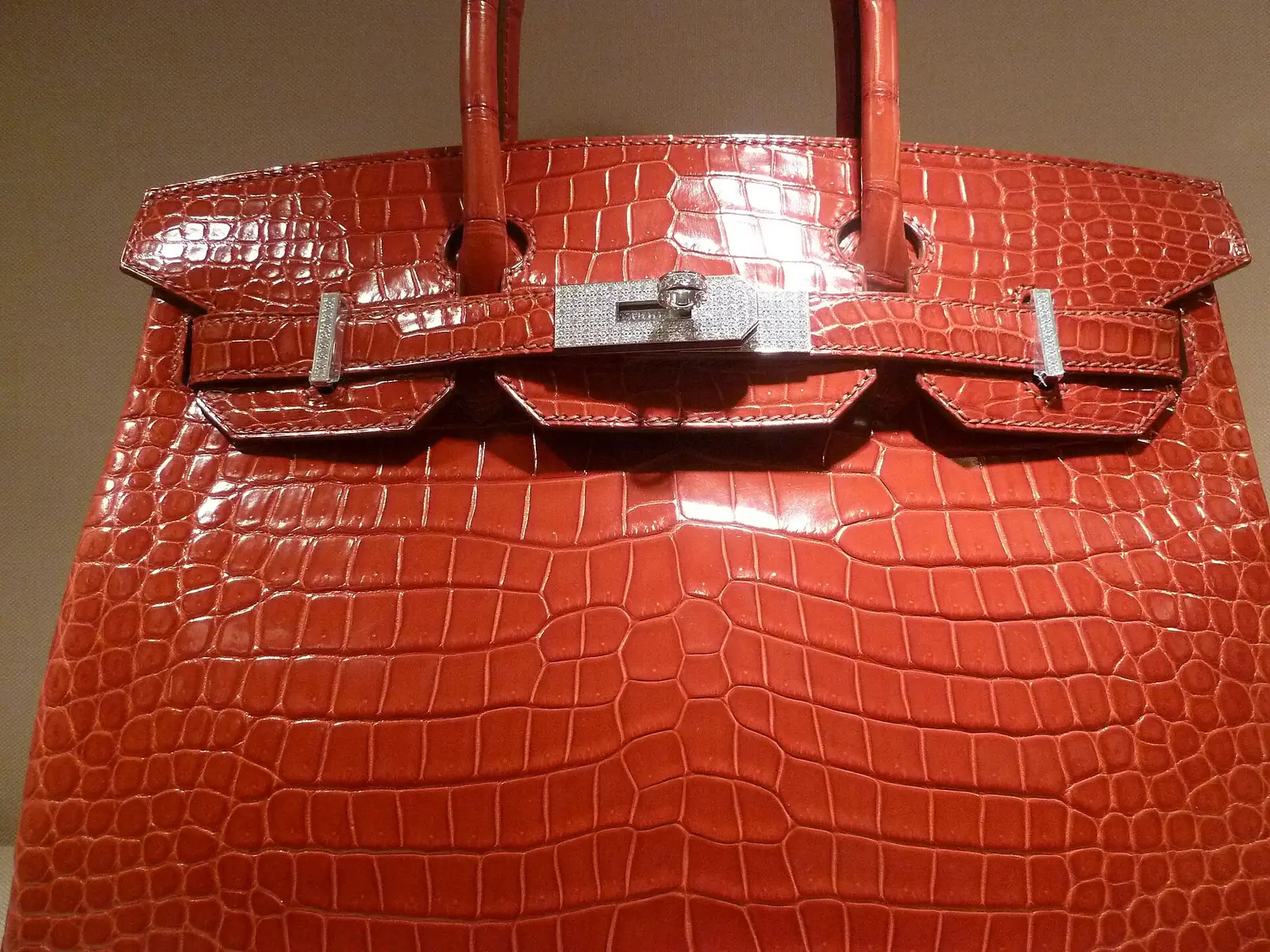
The Birkin was born of small talk. Jean-Louis Dumas, then the boss of Hermès, found himself beside the actress Jane Birkin on a flight, and in 1984 his firm made her a bag of her own. Four decades on, it is the rare status symbol that costs its owner almost nothing to keep, which is a separate matter from being allowed to buy one.
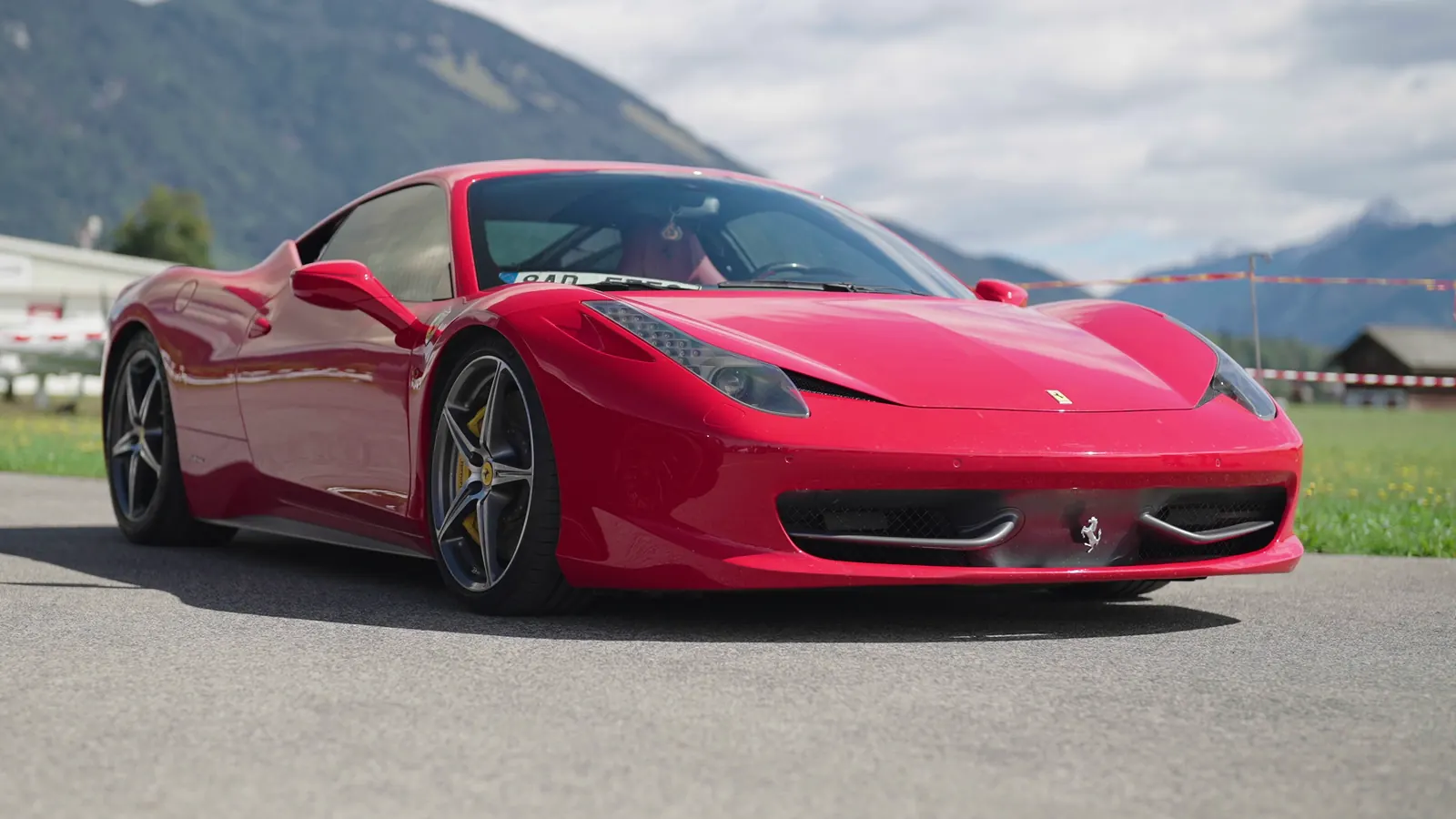
A Ferrari 296 GTB is its opposite: anyone with the money may have one, and the money keeps leaving. Owning the car costs about $41,000 a year before it burns a drop of fuel, or $110 a day for a machine that spends most days in a garage. A steel Rolex sits in between, at $600 to $740 a year, less than the Ferrari charges for a week of standing still.
Thorstein Veblen, the American economist who named the habit in 1899, wrote that “conspicuous consumption of valuable goods is a means of reputability to the gentleman of leisure.” Elsewhere in the same book he put it more bluntly: “In order to be reputable it must be wasteful.” The waste carries the message, and a purchase that cost its owner nothing would tell the neighbours nothing. Veblen never itemised the upkeep, so here it is, in four lines for each object. The first is the American price new. The second is what the object fetches second-hand, which decides how much of that price ever comes back. The third is insurance. The fourth is the interest the same cash would have earned in one-year Treasury bills, 4.49% in mid-October. Money parked in a handbag or a garage earns nothing, and the loss is real even though no bill ever arrives for it. Fuel and parking are left out because they vary by owner, and the pleasure of ownership because nobody has found a way to index it. The yardstick throughout is the median American family, whose income the Federal Reserve put at $82,200 in its 2025 survey. On Veblen’s account that family is the audience.
The yearly bill for 3 status symbols
| Birkin 25 (Togo) | Rolex Submariner Date | Ferrari 296 GTB | |
|---|---|---|---|
| Price new (US) | $13,500 | $11,350 | $338,250 |
| Resale signal | Birkin 30 Togo resells at about 1.0x retail (Bernstein) | $13,637 pre-owned (WatchCharts) | Luxury sports cars keep 67.7% after 5 years (iSeeCars) |
| Value lost a year | about $0 | about $0, bought at list | about $21,850 |
| Insurance a year | priced case by case | $114 to $227 | $3,708 |
| Interest forgone a year | $606 | $510 | $15,187 |
| Yearly cost | $606 plus insurance | $624 to $737 | about $40,746 |
Read across, the table holds one outlier and two bargains. The Ferrari’s yearly bill is about 55 times the Rolex’s at the top of its range, although its price tag is only 30 times higher. The gap between those two ratios is depreciation, and the two cheaper objects escape it for the same reason, which is that their makers ration them. Both bargains come with a queue.
The Birkin: the door is the asset
Hermès sets its prices once a year, and only upwards. A Birkin 25 in Togo leather costs $13,500 in an American boutique this year; in 2016 it cost $9,400, a rise of 44% in a decade. What passes for restraint arrived in February, when Hermès said that its prices would rise by around 5-6% in 2026, after 6-7% in 2025, and put the slowdown down to currency movements. Each bag is made by a single artisan in 18 to 24 hours of work, according to Sotheby’s, so the boutique price comes to roughly $560 to $750 per hour of craft. The company behind those hours took €16 billion in revenue in 2025 and kept 41% of it as recurring operating profit. Its leather goods and saddlery division, home of the Birkin, grew by 13% at constant exchange rates, against 9% for the group as a whole. With list prices up 6-7% that year, much of that growth came from charging more for each bag. Hermès employed 26,494 people at the end of 2025, 16,349 of them in France, where its leather workshops are. It opened the 24th of those workshops, at L’Isle-d’Espagnac in Charente, in September 2025, and has announced one more a year: Loupes in 2026, Charleville-Mézières in 2027 and Colombelles in 2028. A business that adds one workshop a year while raising its prices every year is managing a queue, and the queue is what it sells.
Resellers have paid for that confidence. Sotheby’s sold the average Birkin 30 in Togo for $22,300 last year, and Rebag says its Birkins resold at 122% of retail. The original, Jane Birkin’s own, the bag that came of that conversation on the flight, went under the hammer at Sotheby’s in July 2025 for about $10 million.
Prices like these produced the case for the bag as an investment, which had its loudest moment in January 2016. Baghunter, an online reseller of luxury handbags, published a study claiming that Birkins had risen in value by an average of 14.2% a year over 35 years and had never fallen, against a real annual return of 8.65% for the S&P 500 and 1.9% for gold. A firm that sold Birkins had found that Birkins beat shares and gold, and the press repeated the finding widely. The decade since has been less kind. Bernstein’s tracker shows the resale premium on Birkins and Kellys falling from 2.2 times retail in 2022 to 1.4 times in November 2025, and the classic Birkin 30 in Togo now resells for about what it cost new. Knight Frank’s luxury investment index, which follows the collectibles of the rich, put handbags down 0.2% in 2025, which counted as outperformance in a year when the index as a whole fell 0.4%. A bag that resells at retail has compounded nothing; it has held its owner’s money still while Hermès raised the price of the next one. Its gain since purchase is mostly the firm’s own price list, revised once a year, showing up in the second-hand market. On the numbers in the table, the Birkin 25 gives up $606 a year in Treasury interest and earns it back only if its resale price rises faster than 4.49% a year. Hermès’s list rises of 5-7% would clear that bar, as long as the second-hand market keeps paying retail or better. That makes the bag a bet on one company’s pricing power, a narrower proposition than the one Baghunter published.
What holds the price up is the door. Hermès limits clients to two “quota bags” a year and one registered address, according to Rebag, and buyers pay resellers a premium to skip the wait. In 2024 two shoppers took the matter to a California federal court, alleging that Hermès sells a Birkin only to customers who first buy enough of its other goods. In antitrust law that is a tying claim, the charge that a seller makes one product available only to buyers of another. Judge James Donato dismissed the case with prejudice in September 2025, ruling that the plaintiffs had failed to plead three essentials of such a claim: a defined market, Hermès’s power over the Birkin and harm in the markets for its other goods. The ruling turned on what the complaint failed to show, and it made no finding on whether the practice it described exists. The plaintiffs appealed to the Ninth Circuit and filed their opening brief in February 2026. Hermès replied in May that they were recasting frustration with its exclusive way of selling as an antitrust grievance. No ruling had been reported by mid-November. Either way, the scarcity is the product.
The Rolex: free money, if the dealer calls
Rolex lists the steel Submariner Date at $11,350. The second-hand market prices the same watch at $13,637, so a buyer at list price is about $2,300 up on the walk out of the shop. Getting into the shop is the difficulty, because authorised dealers allocate these watches and the profit goes to whomever they choose to call.
Buy on the open market instead and the sums turn. The WatchCharts Rolex index is down 11.1% over five years, even after a 5.3% rise in the past twelve months. Meanwhile the list price has been climbing towards the second-hand one. Rolex raised American retail prices twice in 2025, by about 5% on average in January, with gold models rising more because of the price of bullion, and by about 3% in May, according to WatchCharts. The duty on Swiss goods entering America then jumped to 39% in August, before a deal announced on 14 November 2025 cut it to 15%. Every rise in the list price shrinks the gap that made a Submariner bought at retail free money. Rolex’s chief executive, Jean-Frédéric Dufour, has said as much: “I don’t like it when people compare watches with stocks.” He made the remark to the Swiss newspaper NZZ in 2024, warning that it was risky to treat watches like shares. The warning comes easily to a firm that rations its watches, because every Submariner flipped for a quick profit turns its queue into somebody else’s margin.
The firm can afford a long view. Rolex is controlled by a charitable trust named for Hans Wilsdorf, who co-founded it in 1908, and the firm publishes no sales figures, so outsiders have to estimate them. Morgan Stanley and LuxeConsult, a Geneva consultancy, reckon its wholesale sales passed CHF 11 billion in 2025 and that it gained a full percentage point of Swiss watch market share. Swatch Group, a rival, attacked the report’s methods in an open letter in February, so the figure is best taken as an order of magnitude. In 2023 Rolex bought Bucherer, the retailer that has sold its watches since 1924. It now owns a slice of its own queue.
Upkeep is small. Specialist insurers quote 1-2% of value a year, and Rolex suggests a service about every ten years. At $740 a year at most, the Submariner costs under 1% of the median American family’s $82,000 income, always assuming the dealer calls.
The Ferrari: $110 a day to stand still
The 296 GTB starts at $338,250, before options. Ferrari spared it in March 2025, when it answered new American car tariffs by raising prices on other models by up to 10% from 2 April and left the 296, the SF90 and the Roma unchanged. The mercy ends at the garage door, where three meters start running.
- Depreciation, about $22,000 a year. If the 296 keeps its value like the average luxury sports car, 67.7% after five years, it sheds about $109,000 by its fifth birthday.
- Interest forgone, about $15,000 a year. The same money in one-year Treasury bills.
- Insurance, about $3,700 a year for a 40-year-old with a clean record. Youth costs extra: a 19-year-old was quoted $17,500 a year to insure a Lamborghini Aventador.
Ferrari’s kindness is real but small: it covers scheduled maintenance for seven years. It will change the oil for free. It will not refund the $22,000.
For Ferrari the arithmetic runs the other way. It shipped 13,640 cars in 2025, 112 fewer than in 2024, and still lifted net revenues by 7% to €7.15 billion. Net profit came to €1.6 billion, about €117,000 per car shipped, although racing and sponsorship income are part of that total. Its operating margin was 29.5%. Benedetto Vigna, the chief executive, said in February that the order book “extends towards the end of 2027”, so the factory’s output was spoken for almost two years ahead. A carmaker with that queue could build more cars, and Maranello has an old rule against anything so obliging. In 2013 its then chief executive, Amedeo Felisa, repeated the founder’s maxim: “as Enzo Ferrari always said, you should build one less car than the market demands.” The rule shows at full strength in the collector market, where in November 2023 a 1962 Ferrari 330 LM / 250 GTO race car sold for $51.7 million at RM Sotheby’s in New York, a record for a Ferrari at auction. The same rule props up the limited-run models collectors fight over today. A series-built 296, being the car Ferrari is willing to build, gets no such floor. That is why its yearly bill comes to about $41,000, half of what the median American family earns.
Speed that holds its value exists, and it is German. The Porsche 911 lost 19.5% over five years in iSeeCars’ 2025 study, the smallest loss of any model it tracked. Against the 32.3% that the average luxury sports car sheds, that is about three-fifths of the damage.
Does the flex pay for itself?
The defence of all this spending is that the signal earns its keep. In 2011 two psychologists in the Netherlands, Rob Nelissen and Marijn Meijers, published experiments in which people wearing clothes with a luxury label, Lacoste among them, were treated more favourably by strangers, who complied more often with their requests and gave more to their charity collections. The finding fitted costly-signalling theory, which holds that a display is believed because it is expensive to fake. In 2017 Joël Berger, a researcher at the universities of Utrecht and Zurich, repeated the experiments five times with 2,830 people in Zurich and Bern. The luxury label did the first half of its job and made the wearer look somewhat wealthier and higher in status. In none of the five experiments did the reward follow: the label brought no better treatment, and strangers complied no more often and gave no more money. Observers also rated the wearer as less prosocial. In poorer neighbourhoods the label tended to reduce help, although that effect fell short of conventional statistical significance. The experiments tested logos on shirts and caps, and a Ferrari in the drive is a louder signal than a polo shirt. Still, the most careful repeat of the classic study found that strangers notice the money and do not reward it.
The cheapest flex is the one you cannot buy
None of the three owners got richer by owning the object. The Birkin and the Rolex are cheap to keep because their makers ration them, so that whoever gets through the door at list price holds something worth more than it cost. The cost of showing off falls instead on the people outside the door. They pay resellers an average of 1.4 times retail for a Birkin or a Kelly, or buy a Submariner second-hand in a market that is down 11.1% over five years. On Berger’s evidence, the strangers all this is meant for think the owners richer and treat them no better. Veblen’s rule survives with an amendment: to be reputable, spending must be wasteful for somebody, and the luxury houses have become expert at choosing whom. The Ferrari’s door is open to anyone with $338,250, and it charges $110 a day for the privilege.
How did it get here, and who feels it?
How it changed
America once taxed showing off directly. A federal luxury tax passed in 1990 fell on yachts over $100,000, cars over $30,000, furs, jewellery and private planes. It raised far less than the $1.5 billion over five years that the Joint Committee on Taxation had forecast, and boatbuilders blamed it for thousands of lost jobs. Congress repealed the tax on boats in 1993.
Sources: Christian Science Monitor; Portland Press Herald archive
Why it matters now
The market for status goods is shrinking at the bottom. Bain and Altagamma reckon about 20 million buyers left luxury in 2025, cutting its client base to roughly 330 million from 400 million in 2022, after the price of iconic leather bags rose 50% to 70% since 2019. Second-hand luxury, worth about €50 billion and mostly watches and jewellery, is growing faster than new sales.
Source: Bain & Company
For a family weighing a status buy
Most households meet luxury at its entry tier, and that is where the price rises have bitten. A Bain partner told Glossy in 2025 that buyers who could no longer afford luxury simply stopped buying, and Bain finds accessible brands growing while aspirational ones shrink. A family that wants the object without the loss on resale now has a large pre-owned market to buy from.
Sources: Glossy; Bain & Company
The fight behind it
The recent fight over luxury ran through trade policy. In August 2025 Washington announced a 39% tariff on Swiss goods, far above the 15% charged on the European Union. Watches of Switzerland called it a shock, retailers warned that prices would have to rise, and Swiss officials said they would keep seeking a deal. Barclays argued that Rolex and Patek Philippe, which ration supply, could pass the cost on more easily.
Customized portfolio review
Professional report, video call and further recommendations. From $180, in 3 tiers.
See the reviewSources44
Sotheby's 1 2; CNBC; WWD; Rolex 1 2; WatchCharts 1 2; WatchCharts Rolex Market Index; Jewelers Mutual; Car and Driver; iSeeCars; Motor1; MoneyGeek; ValuePenguin; Ferrari; FRED; Federal Reserve 1 2; Project Gutenberg; The Fashion Law 1 2 3; Swissinfo 1 2 3 4 5; The National; Hermès International; RTÉ News; Knight Frank; Insight Luxury 1 2; Euronews; Ferrari N.V.; Fortune; Nelissen and Meijers; Joël Berger; Christian Science Monitor; Portland Press Herald archive; Bain & Company; Glossy; WatchPro.
How the yearly cost is built. Interest forgone is the price new at the one-year Treasury yield, 4.49% (FRED, 15 October 2026). The Ferrari’s depreciation is the average luxury sports car’s in iSeeCars’ data, 32.3% over five years; Ferrari publishes no model figure. Rolex insurance is 1-2% of list. Rolex’s sales are an outside estimate. Ratios are computed here.
Figures no source prints are arithmetic on these sources. Sources read 17 October to 14 November 2026. A wrong number gets a dated correction here. General information, not personal financial advice.