Value investing has changed... a lot
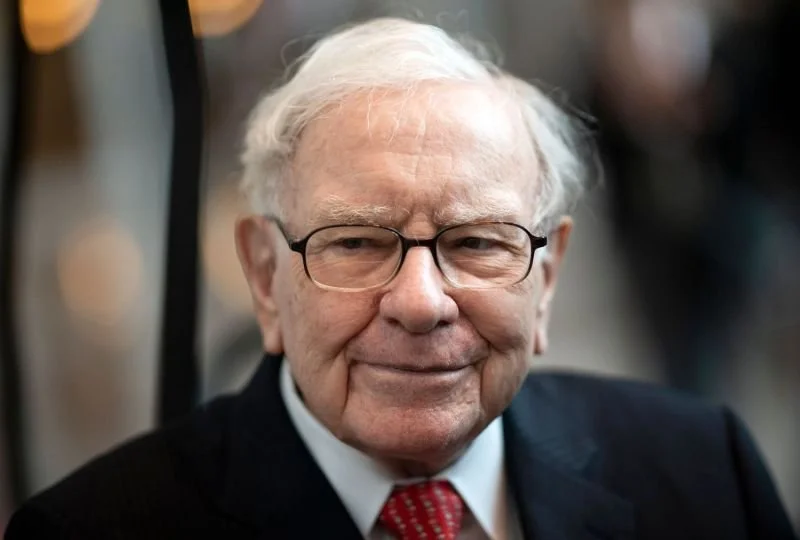
If you try to copy Warren Buffett in 2026 the way people copy him on Twitter, you are more likely to copy the shape of his success than the source of it.
That is a polite way of saying you will probably get hurt.
Let me be clear about what I am not saying. Buffett is one of the best investors of all time. His discipline, patience, and ability to read business quality are rare. The problem is not Buffett. The problem is the lazy idea that his results were produced in a vacuum, as if the world was merely background noise. Economic history is not optional here, because investing is never done in a laboratory. It is done inside a regime. And regimes change.
Buffett started playing the game in a period that was unusually favorable to American capital. In the 1950s Europe was rebuilding from WWII and much of the world was still underdeveloped. The United States had intact industry, an expanding consumer base, and a currency that became the anchor of global trade. It also had a domestic market big enough to scale companies without needing foreign demand to cooperate. That combination is not “skill,” it is the table you are sitting at. A great player still matters, but the table matters too.
Then you had the second wave. The Cold War ended, the U.S. came out as the dominant power, and globalization accelerated. Supply chains went global, profit pools expanded, and technology created entirely new categories of high-margin businesses. Capital markets deepened and liquidity increased. Corporate America also benefited from a broad cultural consensus that equities were the main path to wealth. Again, skill matters, but the climate matters.
Now look at the climate most people are trying to invest in today.
Debt is a big piece of it, not as a moral point, but as a mechanical one. When an economy starts from low debt and builds leverage, you get a long phase where financial assets benefit from expanding credit and falling rates. You cannot repeat “first-time financialization” forever. When debt ratios are already high, the room for clean, painless leverage growth shrinks. Growth can still happen, but it tends to arrive with more policy intervention, more fragility, and more abrupt regime shifts. That changes how “cheap” and “expensive” behave.
Here is the point where a lot of value investors get emotionally attached to the wrong things.
They get attached to the look of value: low P/E, low P/B, “margin of safety” spreadsheets. They treat valuation like a standalone truth, when it is partly a reflection of the world’s cost of capital, competition, and power structure. A low multiple can mean the market is missing something. It can also mean the business is in a slow grind where capital gets diluted, disrupted, or regulated. In a world where intangible assets dominate and scale advantages are brutal, “cheap” can stay cheap for a long time. That is not a tragedy, it is often the correct pricing.
A logical stop.
If your “value” process does not have a section called “what is the regime,” you are not value investing, you are counting.
There is another missing piece: the location. Buffett invested primarily in the U.S., in an era when U.S. firms had unusual protection, unusual market access, and a dollar that functioned as the world’s default savings vehicle. That matters because it compresses risk. It lowers funding costs. It attracts capital during crises. It turns the domestic market into a global magnet. You cannot just transplant that advantage to any country, any decade, any portfolio, and expect the same tailwinds.
The modern mistake is to take Buffett’s principles and then ignore the structural differences that make those principles harder to execute.
Take the idea of buying wonderful businesses at fair prices. Fine. But “wonderful” in 1970 often meant durable brands, distribution, and pricing power inside a growing middle class. “Wonderful” today might mean network effects, data moats, or platform dominance, plus the ability to defend margins against aggressive competitors and shifting regulation. You can still find it, but you cannot find it by screening for book value and hoping the market wakes up. The economy is more intangible, more global, and more winner-take-most.
Now add the portfolio reality of your typical $50k to $1M investor.
You do not have Buffett’s time horizon in practice, even if you say you do. You have a job, a life, and a nervous system that reads red numbers as danger. You also have a higher chance of being overexposed to the same factor without realizing it. You can own 12 positions and still be effectively “long U.S. growth plus liquidity.” That is fake diversification. It works until it does not.
This is the risk lens that breaks people: correlation.
When the regime shifts, correlations change. In calm periods, you think you own variety. In stress periods, you learn you owned the same bet in different packaging. That is why copying a famous investor’s “best ideas” is not a strategy. It is a concentration play disguised as wisdom.
So what does a modern version of value investing look like if you want to keep the spirit but avoid the cosplay?
It starts with admitting that valuation is not a trigger, it is a condition. You can be right on valuation and still be wrong on timing for years. You can buy cheap and watch it get cheaper because the market is repricing the whole sector’s future, not missing a small detail. You can buy “quality” and still lose money if you paid for perfection at a moment when the cost of capital is rising. None of that is a betrayal of value investing. It is just reality.
Buffett’s edge was not only selecting good businesses. It was also operating in a long American expansion, in a market with deep liquidity, and with an institutional structure that rewarded long-term ownership. You can learn from his temperament, his clarity, and his obsession with business quality. But if you copy his style without respecting the modern constraints, you are trying to win the last war with last decade’s weapons.
The game changed.
The question is not whether value investing is dead. The question is whether your definition of value has updated to include regime, exposure, and the cost of capital, or whether it is still a shrine to ratios that worked best in a different world.