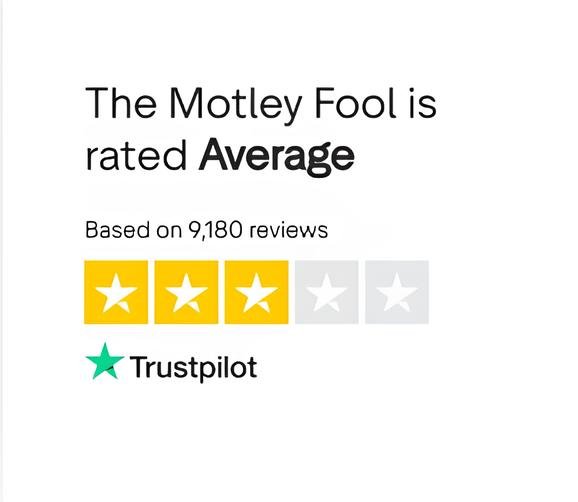
Reading The Motley Fool never made anyone rich
That headline is a bit unfair, because it is too clean. Real life is never that clean. But the spirit of it is true enough to be useful.
Most people who “invest” through mass-market investing content are not building a strategy. They are renting a feeling. The feeling is usually confidence. Sometimes urgency. Often both. And if your inputs are designed to keep you reading instead of keep you disciplined, your portfolio becomes a side effect of someone else’s business model.
Here’s my thesis: the problem is not that popular investing outlets are evil or that every article is wrong. The problem is incentive design. When the product is attention, the content will skew toward what grabs attention. That means buzzwords, big claims, dramatic framing, and shiny narratives. It means more “what to buy right now” and less “how to avoid dumb risk for the next decade.” It means noise that feels like signal, because signal is boring.
Let’s talk about the “non professional writers” point, because that can sound snobby. I do not care where someone studied, and I do not care whether they wear a tie. I care whether the writing reflects an actual process and a consistent standard. Most mass-market stock content is written to be consumed quickly, forgotten quickly, and replaced quickly. That alone tells you it is not meant to be an investment process. It is meant to be a content treadmill.
The classic pattern is predictable. A headline makes a bold claim, a few confident paragraphs follow, and the reader feels they are now “in the know.” The language is designed to reduce friction, so you do not stop and ask the annoying questions. What is the valuation? What is the downside? What would make this thesis wrong? What is the time horizon? What kind of drawdown do I need to tolerate for this to work? Those are the questions that matter. They rarely fit the business model of rapid publishing.
A concrete scenario. You read a “three stocks to buy” piece on a Sunday, you buy Monday morning, and you feel productive. The stock drops 12% over the next six weeks because rates move, the market de-risks, or the company guides down a touch. Nothing catastrophic happened, but you are now emotionally involved. You start searching for more articles about the stock, because you want reassurance. That is when the trap closes. You are not managing risk, you are managing anxiety.
Notice what broke you there. It was not a lack of intelligence. It was narrative risk.
Narrative risk is when your conviction comes from a story that is easy to repeat but hard to stress-test. Stories are sticky. Portfolios are not. A portfolio needs position sizing, entry discipline, and a plan for when you are wrong. Content gives you the story and leaves you alone with the consequences. That is why the same person can read a hundred “great ideas” and still end up with a portfolio that behaves like one giant bet.
This is where the “biggest and shiniest” problem shows up. Popular outlets drift toward what people already recognize, because recognition sells. If a name is famous, it feels safer, even when it is fully priced. If a sector is hot, it feels like “the future,” even when you are late. The result is accidental crowding. You end up holding a portfolio that is concentrated in the same few themes as everyone else, just with different labels. When the regime changes, you discover your diversification was mostly cosmetic.
The incentive question is the quiet core of all of this.
Why would the best advice be distributed for free, or for very cheap, to an audience of millions? Sometimes it is, but usually it comes with strings. Free content has to monetize, either through ads, affiliate arrangements, upsells, or constant churn. That does not make it dishonest, it makes it structurally biased. The bias is toward activity, novelty, and confidence. The bias is away from “do less,” “hold cash sometimes,” “size smaller,” and “this is not knowable.” Those are good investing behaviors. They are terrible marketing.
There is also a second layer. Even if a recommendation is smart, it can still be unusable. The gap between a good idea and a good position is enormous. Timing matters. Price matters. Your existing exposures matter. Liquidity matters. If you already own five positions that move with growth stocks, adding a sixth “great growth stock” is not diversification, it is doubling down. Most content does not know your portfolio, so it cannot manage that for you. That is not a moral critique, it is a practical limitation.
So what should a self-directed investor do, if they still want to read widely without becoming a hostage to noise?
First, treat every outlet like an employee with a KPI. Ask what the KPI is. If the KPI is clicks, the content will optimize for clicks. If the KPI is subscriptions, the content will optimize for perceived value and urgency. If the KPI is brand trust, the content will optimize for tone and consistency. That is not cynicism, it is basic realism. Once you see the KPI, you stop taking the content personally.
Second, separate entertainment from decision inputs. You can read for ideas, but you need a filter that turns “interesting” into “actionable.” That filter should be yours, not theirs. If you do not have a filter, your portfolio will reflect the emotional rhythm of the media cycle.
Here are a few rules of thumb that work without turning investing into a religion:
Do not buy anything the same day you read about it. Put it on a watchlist and force a delay. If the idea cannot survive a week of distance, it was never strong.
Write a one-paragraph bear case before you buy. Not a novel, just the obvious ways you could be wrong. If you cannot write it, you do not understand the risk.
Map your exposures in plain English. Ask, “What does this position depend on?” Rates down? Consumer strength? Commodity prices? If three positions depend on the same thing, you have concentration risk, even if the tickers look different.
Size positions like you respect uncertainty. If a single headline can make you panic, the position is too big. That is not weakness, that is math.
Stop looking for the “best stock.” Look for a portfolio that can survive being wrong. The goal is not perfect picks, it is resilience.
Track your own results by decision type, not by ticker. Was this a narrative trade? A valuation trade? A quality compounder? If you label your decisions, you learn faster.
If you do those six things, you can read anything you want. You can read The Economist, you can read newsletters, you can read Twitter threads. The content becomes raw material, not a steering wheel.
The real question is not “is this outlet good or bad.” That is a lazy framing. The real question is, “What behavior does this content encourage in me?” Does it make you calmer and more disciplined, or more reactive and more certain than you should be? Does it push you toward concentration and activity, or toward process and risk control? You do not need to demonize anyone to answer that honestly.
If you want one clean takeaway, it is this: most people do not lose money because they lacked ideas. They lose money because they lacked a system that filters ideas through risk, price, and portfolio context.
So, when you read your next “can’t miss” piece, ask yourself a simple question: is this helping me invest, or is it helping me feel like I am investing?
Disclaimer: This is educational commentary, not financial advice. Make decisions based on your own research and risk tolerance.